
The sensation of a stuffy, hot room can be quite uncomfortable. Your productivity plummets as you lie there, unable to find comfort. For good reason, a good ceiling fan has been a straightforward solution for generations.
However, picking the ideal ceiling fan for your living room can be surprisingly difficult. It goes beyond appearances. Considerations include blade direction, airflow, and room size.
You can easily choose one that creates a wonderful atmosphere in your room by following this fan buying guide, which will take you through every step of the process. You’ll discover what to look for in order to save energy and create a comfortable environment.
Why a Ceiling Fan is Your Secret Weapon for Comfort
The purpose of a fan is not to reduce the room temperature, despite what you may believe. The way a ceiling fan operates is by making your skin feel cold. You feel cooler because the air movement speeds up the evaporation of moisture from your skin. It’s a surprisingly efficient method of achieving comfort without actually altering the temperature of the space. The fan alters your perception of the air, not its temperature. This idea explains why ceiling fans are such an effective way to add comfort to any area, whether it’s a dining room or a bedroom.
This is also the reason they are so excellent for enhancing energy efficiency and your budget. To cool a whole room, an air conditioner must work hard, which consumes a lot of electricity. Since a ceiling fan’s only function is to circulate air, it consumes a lot less energy. The Department of Energy states that you can increase your thermostat setting by approximately 4°F without sacrificing comfort by using a fan. Your summer electricity bills can be significantly reduced with this minor adjustment. Many contemporary fans are Energy Star certified, which indicates that they adhere to stringent government efficiency standards.
All year long, a good indoor ceiling fan is also helpful. The blades force cool air downward during the summer. To help with your heating in the winter, you can, however, reverse the direction. It increases the efficiency of your heating system by gently pushing the warm air that collects at the ceiling back down into the living area.
Picking the Perfect Ceiling Fan For Your Space
There are a few things you should consider before purchasing a fan. Making the correct decision will safely and effectively cool your room. Choosing the wrong kind could result in poor ventilation or a fan that doesn’t match the furniture in your room.
Size Really Does Matter
The fan’s size, which is determined by the diameter or span of its blades, is the most crucial component. If a fan is too small for a room, it will have trouble moving enough air. An overly sized one can make a small guest bathroom feel claustrophobic and windy.
The first step is to calculate the square footage of your room by multiplying the length by the width. After that, you can use that figure to determine the ideal fan diameter for adequate airflow. The key to good performance is getting the right-sized ceiling fans. To help you match fan size to room size, here is a general guide.
| Room Size (Square Feet) | Recommended Fan Diameter (Inches) |
| Up to 75 sq. ft. (Small bedrooms, offices) | 29-36 inches |
| 76 to 144 sq. ft. (Bedrooms, kitchen) | 36-42 inches |
| 145 to 225 sq. ft. (Master bedrooms, family rooms) | 44-50 inches |
| 226 to 400 sq. ft. (Large family rooms, game room) | 50-54 inches |
| Over 400 sq. ft. (Great room, open-concept spaces) | 56 inches or larger |
You can choose the best option for your space by using a guide like this one. Keep in mind that ceiling height matters as well. Most fans work well with standard 8-foot ceilings, but a longer downrod might be required in a great room with higher ceilings in order to raise the fan to the ideal height.
Understanding CFM and Airflow
CFM, or cubic feet per minute, is another technical term you may encounter. The amount of air a fan can move at its maximum speed is indicated by this measurement. Stronger airflow is indicated by a higher CFM number. The most accurate way to gauge a fan’s performance is to look at its CFM, not just its motor size or number of blades. Fans are rated based on their pure movement, but some air purifiers are rated based on their capacity to change air. The CFM ratings of two identical-looking indoor ceiling fans may vary significantly.
A fan with a CFM of 4,000 to 6,000 is typically a great option for a typical office or bedroom. For optimal circulation, larger living rooms or open areas may require a fan with a CFM greater than 6,000. To find out exactly what you’re getting, look for this number in the product specifications.
Considering Lights, Remotes, and Smart Features
A light kit is often included with fans. If the fan is taking the place of the primary overhead light fixture in your room, this could be fantastic. An integrated LED light, which is durable and energy-efficient, is a common feature of contemporary fans.
Consider your strategy for managing the fan. A pull chain is the traditional choice; it is dependable and easy to use. Modern fans come with a wall control or a handheld remote control, which makes it easy to change the lighting and speed from anywhere in the room.
These days, smart ceiling fans are also available. These smart fans can be operated via a phone app or even your voice using Google Assistant or Alexa. Although they are slightly more expensive, the hands-free control can be a huge benefit, particularly if you want to switch between options without getting up.
A Look at Different Ceiling Fan Styles
You want a fan that looks good in your room in addition to its technical specifications. Fans are available in a range of designs to complement various interior design styles. Considering the fan’s appearance will help it fit in with your room.
The Classic Standard Fan
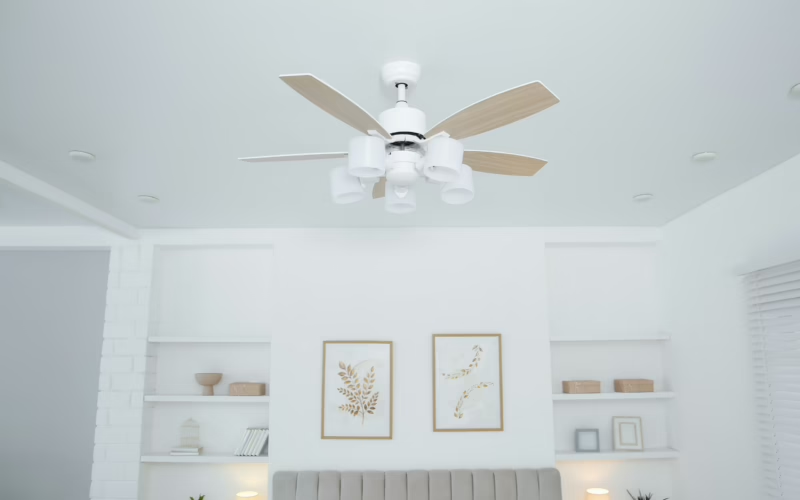
When most people think of a ceiling fan, this is what they see. It usually has five blades and is suspended from the ceiling using a downrod mount. They are the most widely used kind of ceiling fan and are very adaptable.
Standard fans are available in a variety of finishes, such as dark rubbed bronze, brushed nickel, and the traditional white and matte white. To match your room’s furniture precisely, you can choose between a sleek matte black or an oil-rubbed finish. This classic style works well in most rooms with ceilings eight feet or higher.
Low-Profile or Hugger Fans
What if your ceilings are low? A typical fan may hang too low for safety. For rooms with ceilings under eight feet, a low-profile fan, or flush mount fan, is the right mount type. Because they are mounted straight against the ceiling without a downrod, these are also known as hugger fans. This optimizes the distance between the floor and the fan blades. Just as many color options are available for the housing, including the popular black and white combos for contemporary spaces.
Remember that they may move a little less air than regular fans because they are so near the ceiling. However, they are the greatest and safest choice for spaces with limited height. Their streamlined appearance can also contribute to a clean, modern aesthetic.
Outdoor and Damp-Rated Fans
It’s nice to know that they exist, even if you don’t need one for your bedroom. You’ll need a specific kind of fan if you want one for a covered patio, porch, or even a steamy bathroom. Outdoor fans are designed to withstand the weather, as you will discover when you browse outdoor collections.
An outdoor ceiling fan can be classified as either damp-rated or wet-rated. Fans with a damp rating are ideal for covered outdoor areas because they can withstand moisture but not direct rain. Because its materials won’t rust or distort in the presence of rain or snow, a wet-rated fan can be placed directly in these conditions.
These fans can have outdoor lighting and frequently have strong motors to generate a breeze in a wide-open space. They are necessary to improve the comfort of outdoor living areas. Durable materials like treated wood or all-weather plastics are found in many outdoor fans.
Diving into Motor and Blade Technology
Any ceiling fan’s motor is its most important element, and the design of the blades influences both functionality and appearance. You can make a better decision if you are aware of these factors. A longer-lasting product and improved air movement can result from the correct combination.
AC vs. DC Motor
Historically, the majority of ceiling fans have been powered by dependable and reasonably priced AC (alternating current) motors. But for good reason, DC (direct current) motors are growing in popularity. Compared to their AC counterparts, fans with DC motors are substantially more energy-efficient, frequently consuming up to 70% less energy.
In addition to being significantly quieter, DC motors usually have six or more speed settings, as opposed to the typical AC fan’s three. This makes it possible to regulate the airflow in your room more precisely. They might cost more up front, but the performance advantages and energy savings can make the investment worthwhile.
Blade Design, Count, and Materials
Solid wood, plywood, plastic, and metal are among the materials used to make fan blades. The style of the fan is mostly determined by the material, ranging from the industrial vibe of a Minka Aire model with metal blades to the rustic appearance of a Hunter fan with wooden blades. The blades’ finish can also provide a pleasing contrast or match the color of the housing.
In the past, the quantity of blades was a major topic of discussion, but these days, appearance is more important than functionality. If properly designed, a fan with three blades can move as much air as one with five. The pitch or angle of the blades is more significant than their number; a steeper pitch can move more air.
Tackling Installation: A Renter’s Guide
It can be intimidating to install a ceiling fan. However, replacing an existing light fixture can be a manageable task. Safety is always the first and most crucial step. Turn off the electricity in the room you’re working in by going to your circuit breaker box. Before touching any wires, make sure the power is off by using a voltage tester. This is a crucial step.
Additionally, you should confirm that the electrical box in the ceiling is sturdy enough to support the weight and motion of a fan. A fan-rated box, which is more robust than a typical light fixture box, is required. This is essential for safe installation, as the Electrical Safety Foundation International emphasizes. If you’re unsure about wiring or need help installing your new ceiling fan safely, hiring a licensed electrician in Easton is the best way to protect your home and provide a proper setup.
You need your landlord’s consent before you can begin living in a rental as a tenant. While many landlords are amenable to this upgrade, others may have particular guidelines. An unauthorized installation is not worth risking your security deposit for. Do not continue if you are unsure about the support box or the wiring. Hiring a qualified electrician from GB Electric is a safer option. The risk to your safety is not worth it, and a professional can confirm that your fan is safe and compliant.
Getting the Most From Your Fan Year-Round
A little knowledge will help you make the most of your fan once it’s up. The majority of people are unaware that their fan can be useful in the winter as well. A small switch only needs to be flipped. The majority of fans have a tiny switch on the motor housing that allows the blades to spin in different directions. The blades should rotate counter-clockwise in the summer. This generates that refreshing breeze by forcing air directly downward.
To make the blades spin clockwise in the winter, flip the switch. This draws cool air upward when operated at low speed. You feel warmer as a result of the warm air that has risen to the ceiling being gently forced back down along the walls and into the space. Lastly, remember to clean the light kit’s blades and any glass shades. Over time, dust may accumulate on top of the blades. Dust can spread throughout your room when the fan is turned on, which is bad for the quality of the air. To keep your fan operating efficiently and your air clean, give it a quick wipe down every few months.
Shopping for Your Ceiling Fan
The sheer volume of options can be daunting when you first start shopping. Free shipping is a great perk to look for, and it’s offered by many retailers. To reduce your options by size, color, and features, use the filter sort features on the website.
Sorting by price or popularity allows you to see what other people are purchasing. Don’t pass up open box sales, which can provide a perfectly good fan at a lower cost. Reading other customers’ reviews can also give you important information about how well a fan performs in real life. Regular electrical maintenance in Coopersburg can also keep your ceiling fans and other fixtures running efficiently while preventing costly electrical issues down the line.
Many fan manufacturers provide a limited lifetime warranty on the motor, so look for a good one. This demonstrates the fan company’s commitment to its product. After a purchase, registering your product will greatly simplify any subsequent claims.
Why the Right Ceiling Fan Choice Matters
A smart tool for making a home more comfortable and energy-efficient, a ceiling fan is much more than just a spinning fixture. You can choose the ideal one for your requirements by being aware of the room size, CFM, style, and mount type. The advantages are obvious whether you go with a traditional ceiling fan with style-driven lights or a contemporary black one. Every day, the upgrade has a noticeable impact. On a hot afternoon, you’ll notice a difference in your energy bills. Comfort throughout the year can be achieved by taking the time to choose the best ceiling fans.
Despite being a simple addition, a ceiling fan has a big impact. The correct choice makes all the difference, whether it’s a small flush mount in a small space or a commercial ceiling fan in a large area. A step toward a better living space is choosing your next ceiling fan wisely. Ready to upgrade your comfort with the right ceiling fan or need expert electrical help? Contact GB Electric today to schedule your service.
