
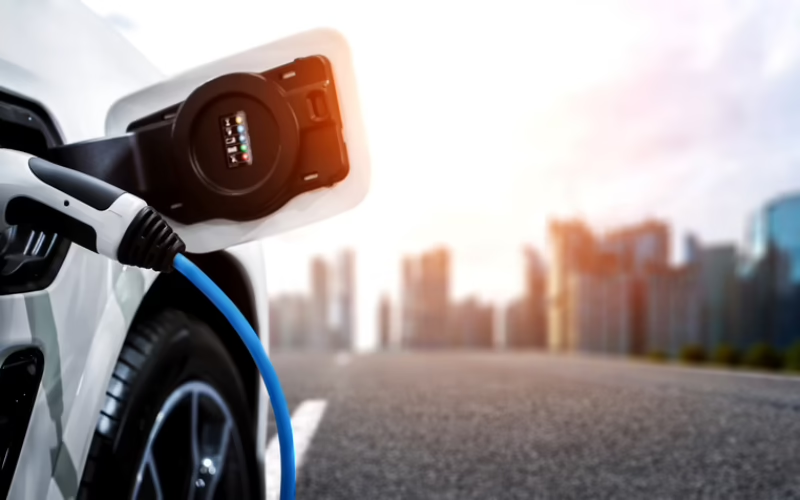
New owners often ask a very common question after purchasing their first electric vehicle: How often do electric cars need to be charged? Buying an electric car changes how you think about fueling and daily energy management. The transition to electric mobility is less about finding a station and more about integrating smart energy habits into your lifestyle. Working with the team at GB Electric to install a dedicated home charging system makes this shift easy, helping you understand how battery chemistry interacts with your daily driving habits and environmental factors.
You might assume the process requires a rigid routine similar to plugging in your smartphone every single night. The reality looks quite different for most drivers hitting the road today because battery capacities have increased significantly. We need to shift away from old habits and understand modern vehicle capabilities to maximize the convenience of ownership. By treating your car as a mobile energy storage unit, you can optimize your schedule for both cost and efficiency.
Breaking Down the Gas Car Mindset
The short answer is that you probably need to replenish your power less frequently than you initially think. For the average commuter, plugging in a vehicle daily is usually an unnecessary habit that wastes time and effort. Most drivers travel fewer than 40 miles per day for work and errands, meaning the vehicle remains parked for over twenty hours a day.
Since a modern EV provides over 250 miles of range, a single session can last an entire week for many people. The exact frequency depends on your daily commute and your regular weekend activities. If you commute 80 miles a day, you will naturally plug in more frequently than someone working from home. This idle time represents a perfect opportunity to replenish the battery without disrupting your personal or professional schedule.
People who drive short distances might only connect their electric car once every five days to maintain a healthy charge. Ultimately, the answer depends on how you use the vehicle and your access to power at home or work. Your baseline charging frequency shifts based on multiple variables throughout the year including seasonal changes and driving style.
Key Factors Influencing Your Charging Schedule
How often you plug in changes based on multiple environmental and mechanical variables that affect energy consumption rates. Temperature plays a massive role in overall battery performance year-round and affects how the chemistry reacts to power demands. During severe cold weather, the chemical reactions inside a lithium-ion battery slow down significantly, reducing available power. You will notice increased energy consumption to heat the cabin and condition the battery cells for optimal performance.
Consequently, your available range drops, requiring you to charge more frequently during winter months to maintain your mobility. Some vehicles lose a notable portion of their rated range in freezing temperatures due to these physical limitations. Utilizing a feature called “pre-conditioning” can help mitigate these cold-weather effects by warming the battery while still plugged in, pulling electricity from the grid rather than the battery.
| Driving Environment | Average Energy Consumption | Recommended Charging Interval |
| City Commuting (Stop & Go) | Low (Highly Efficient via Regen) | Every 5 to 7 Days |
| Mixed Suburban Driving | Moderate | Every 3 to 4 Days |
| Highway / High-Speed Travel | High (Increased Wind Resistance) | Daily or Every 1–2 Days |
Home Charging Solutions: Level 1 vs. Level 2
The equipment you use at home dictates how quickly you replenish your battery and how often you need to plug in. Most vehicles come with a standard Level 1 cable that plugs into a regular 120-volt wall outlet. This method adds about three to five miles of range per hour of charging, which is slow but steady. While this may seem insufficient, it can often cover the needs of those with very short daily commutes.
However, most owners upgrade to a Level 2 station for faster home charging that offers greater flexibility. A Level 2 charger requires a 240-volt circuit, similar to a clothes dryer, and replenishes the battery much faster than Level 1. This upgrade allows you to recover your daily driving usage in just a couple of hours, making the process much easier for busy families.
When planning an upgrade to your home setup, local support from GB Electric simplifies the transition by handling the necessary panel assessments and dedicated circuit routing. Securing a professional electrical car charging installation in Northampton guarantees that your system complies with local electrical codes and safely delivers maximum power to your vehicle. Working with a specialized regional team like GB Electric removes the guesswork from matching your charger to your home’s existing infrastructure.
How to Establish a Systematic Charging Routine
- Track Your Weekly Mileage: Monitor how many miles you actually drive during a standard work week to establish a clear baseline for your energy needs.
- Set Software Charge Limits: Adjust the software settings in your car’s infotainment system or mobile app to automatically stop receiving power once it hits 80 percent for daily use.
- Schedule Off-Peak Power Sessions: Program your vehicle or smart charger to only pull electricity during the cheapest hours of the night when utility grid rates drop.
Public Charging Networks and Rapid Speeds
Direct Current (DC) fast charging provides a massive convenience for road trippers traveling across the country on long journeys. These powerful stations let EVs gain range rapidly, often reaching an 80% charge in roughly thirty minutes or less. However, relying on them for your regular daily routine can negatively impact your vehicle’s battery health over time.
The intense heat generated by rapid power delivery stresses the individual battery cells and can lead to faster capacity loss. While occasional use during long trips is perfectly safe, daily rapid charging accelerates long-term degradation and reduces total range. For normal use, slower Level 2 charging at home or work remains the best choice for preserving battery life and guaranteeing longevity.
Utilizing your vehicle’s regenerative braking system can also help you stretch the time between necessary charging sessions. When you lift off the accelerator pedal, the system converts the vehicle’s kinetic energy back into electricity and feeds it directly into the battery pack. Mastering “one-pedal driving” modes maximizes this recovery efficiency, reducing your reliance on public plugs and minimizing wear on your traditional brake pads.
Planning Your Home Power Infrastructure
Transitioning away from public infrastructure entirely requires a home setup built to handle your weekly mileage demands. Upgrading your garage or driveway with a dedicated circuit prevents you from scheduling your week around commercial fast chargers. Consulting with the expert team at GB Electric gives you a clear understanding of your home’s electrical capacity and the best hardware options for your specific vehicle model.
To learn more about residential charger setups or to schedule an assessment for your property, contact us today.
