
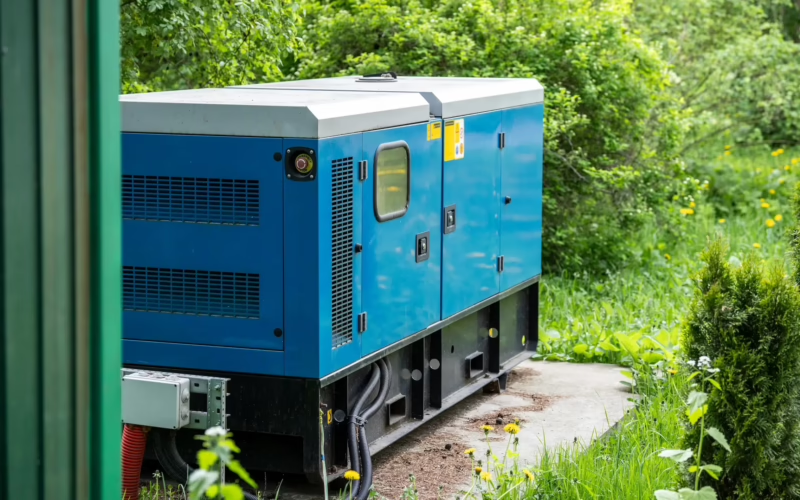
Most standby generator projects run six to twelve weeks from the first site visit to the day the unit completes its first self-test. Begin that clock in October and the system is live before winter ice storms roll through; begin it in December and you are queued behind every homeowner whose lights just went out. At GB Electric, we see this timing gap as the single biggest reason fall is the calmest, most cost-effective stretch of the year for this kind of work.
Generator Demand Spikes After the First Outage, Not Before
Call volume for standby generators follows weather, and it follows it late. A major storm knocks out power across surrounding counties on a Tuesday, and by Thursday installers are booking into the following season.
October sits in the quiet stretch between hurricane remnants and the first real freeze. Distributors still have popular air-cooled units in stock, automatic transfer switches are not backordered, and crews have open calendar space for the trenching and gas work that generators require.
There is a pricing angle too. Manufacturers frequently run fall promotions on 18 kW to 26 kW residential units, and installers who are not fighting emergency storm calls can quote the job on normal rates rather than overtime.
Permits and Utility Coordination Move Slower Than Homeowners Expect
A generator is not a weekend appliance swap. In most municipalities the job needs an electrical permit, often a separate mechanical or gas permit, and a third-party inspection under the Uniform Construction Code before the unit can be energized.
Plan on two to six weeks for that paperwork depending on the local building department. Municipal offices handle permitting on their own schedules, and a local office with one part-time code officer moves at a different pace than a larger city department.
Fuel adds another party to the project. If your house runs on natural gas, the supplier may need to upsize the meter to handle an additional 200,000 to 300,000 BTU of demand, and that request can sit in a queue for several weeks during busy months.
What a Standby Generator Installation Actually Involves
- Load evaluation and site walk: The electrician calculates connected load under NEC Article 220 and identifies a spot at least five feet from any door, window, or vent opening.
- Pad preparation: A poured concrete pad or a manufacturer-approved composite pad, leveled and set on compacted stone.
- Gas line run: Trenching and piping from the meter or propane tank, sized so the generator receives adequate pressure under full load.
- Transfer switch installation: Either a whole-house service-rated switch or a managed switch feeding a subpanel of selected circuits.
- Final wiring and startup: Control wiring, battery installation, fuel pressure check, and a commissioning run under load.
- Inspection and utility sign-off: The inspector verifies clearances, bonding, and grounding before the system is handed over.
From the homeowner’s side, actual on-site work usually spans two to four days. The waiting happens around it.
Sizing the Unit to the House, Not the Brochure
Oversizing wastes money and causes wet stacking in diesel units; undersizing trips the generator every time the well pump and the furnace start together. A load calculation by GB Electric sorts this out in about an hour.
- 10 kW to 14 kW: Essentials only, covering a furnace or boiler, well pump, refrigerator, sump pump, and a handful of lighting circuits.
- 18 kW to 22 kW: The common choice for a 2,000 to 3,000 square foot home with gas heat and one central air system.
- 24 kW to 26 kW: Whole-home coverage where there is electric heat, a heat pump, two AC compressors, or an EV charger in the garage.
- Liquid-cooled 30 kW and up: Larger properties, workshops, or homes with well and septic pumps plus multiple HVAC zones.
Load management modules have changed the math recently. A 22 kW unit paired with smart load shedding can cover a house that would otherwise have needed a much larger liquid-cooled generator.
Natural Gas or Propane Options
Both fuels work well in standby service, and the right answer usually comes down to what already runs to the house.
- Natural gas: Unlimited runtime, no refueling, no tank to bury or screen. The drawback is dependence on the gas main and possible meter upgrade costs.
- Propane: Available anywhere, slightly higher BTU output per cubic foot, and independent of the gas utility. A 500-gallon tank at 80 percent fill runs a 22 kW generator roughly three to five days at moderate load.
Rural properties frequently go propane because the gas main simply does not reach the road. A licensed electrician in Coopersburg will coordinate with the propane supplier on tank placement so the regulator, generator, and pad all meet clearance rules the first time.
Cold Ground Makes the Same Job Harder in December
Trenching a gas line through frozen soil takes longer, costs more in labor, and sometimes requires equipment that will not fit through a narrow side yard. Concrete pads also need reasonable temperatures to cure properly, which is why installers either switch to composite pads or add blankets and admixtures once nights drop below freezing.
Fall soil is still workable, and lawns recover before spring rather than sitting as muddy ruts all winter. That alone is worth the earlier booking for anyone who cares about landscaping.
Cold-Weather Accessories Worth Adding at Installation
Air-cooled generators start reliably in winter only if they are equipped for it. The cold-weather kit, ordered with the unit rather than retrofitted later, typically includes a battery warmer and an oil heater, and it costs far less when installed during the original visit.
- Battery maintainer or warmer: Keeps cranking power consistent below 20 degrees Fahrenheit.
- Crankcase oil heater: Allows synthetic 5W-30 to flow freely at startup.
- Snow hood or enclosure shielding: Protects the intake where drifting snow is a known issue.
- Remote monitoring module: Sends an alert if the weekly 12-minute self-test fails.
One more safety note worth repeating: standby units sit outdoors on a pad for a reason, and portable generators should never run in a garage or breezeway. The safety guidance at Ready.gov covers required carbon monoxide clearance distances (placing units outdoors and at least 20 feet away from doors and windows) and backfeed hazards in plain language.
Schedule Your Generator Site Visit Before the First Freeze
The team at GB Electric handles load calculations, permitting, and utility coordination for standby generators across the entire regional service area. Contact GB Electric today to book a fall site visit and get a firm installed price for your home.
