
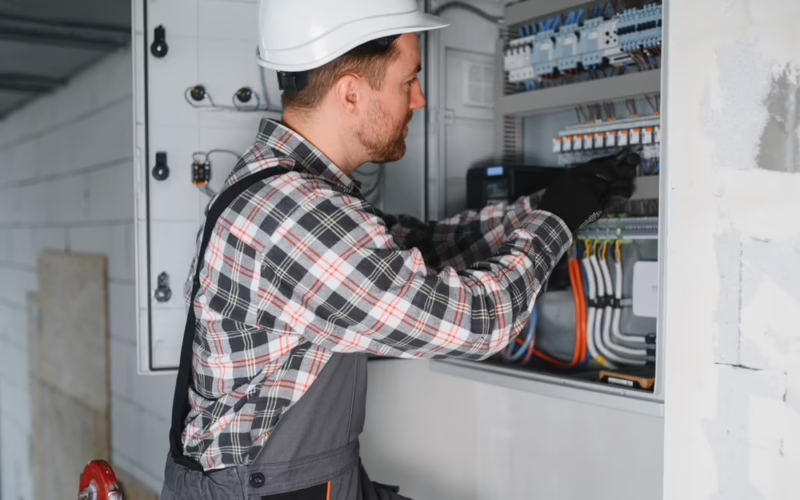
Your electrical panel is the heart of your home’s entire power system. It takes the electricity coming from the utility company and safely divides it up among all your wall outlets, kitchen appliances, and bedroom lights. If you are building a new home, putting an addition on your property, or adding heavy-duty circuits for new equipment, you need a brand-new panel to hold those switches.
If you are trying to figure out how to install an electrical panel, it is important to know right from the start that this is a highly advanced, dangerous job. Unlike changing a light bulb or swapping out a wall switch, a new panel installation means dealing with high-voltage service lines that carry lethal amounts of electricity. At GB Electric, we handle the heavy permitting, utility coordination, and complex wiring to get your power hub up and running.
Let’s look at exactly what goes into an electrical panel installation and why having our professional crew handle the job keeps your household running safely.
When Your Property Needs a New Panel Installed
Most properties require a brand-new breaker box installation during major construction or systemic changes. A standard panel simply cannot hold an infinite number of switches, and trying to force too many wires into a small space creates a major fire hazard.
You will typically need to install a brand-new panel during these situations:
- New Home Construction: Building a house from the ground up requires a complete design and placement of a fresh electrical hub.
- Home Additions: Adding a new guest suite, a finished basement, or a detached garage requires a secondary sub-panel to feed power to the new rooms.
- Heavy Appliance Additions: Installing high-power equipment like a central air system, a hot tub, or an electric vehicle charging station often demands a dedicated panel to handle the immense power draw.
- Commercial Workshops: Setting up specialized shop tools, air compressors, or welding gear requires a separate panel to prevent blowing out your main house circuits.
If you are expanding your property, our team at GB Electric can calculate your total power load and design a layout that matches your needs. For properties located in the major metro area, arranging a professional electrical panel installation in Philadelphia is the best way to get your new build hooked up to the power grid correctly.
Deciphering the Inside of a Main Panel Box
To understand how a new box is put together, it helps to know what the main parts do. A professional installer must match up your home’s wiring to specific points on the new panel to make sure electricity flows correctly.
The chart below breaks down the main components found inside a standard residential breaker panel:
| Component Name | What It Looks Like | What It Safely Controls |
| Main Breaker | Large switch at the top | Shuts off the electricity to the entire house in a single flip |
| Hot Bus Bars | Two thick metal strips | Hold the individual breakers and feed them live electrical current |
| Neutral Bus Bar | Silver strip with small screws | Brings the used electricity back out of the rooms and safely loops it home |
| Grounding Bar | Separate metal strip | Connects to a copper rod driven into the dirt to protect against lightning spikes |
| Circuit Breakers | Individual black switches | Protect single rooms or appliances by flipping off if the wires get too hot |
The Blueprint Steps of a Panel Installation
When GB Electric mounts and wires a new box, the physical process follows a precise sequence to make sure every connection is physically tight and electrically sound.
First, the empty metal panel box is anchored securely to the wall studs, usually in a utility room or basement. Next, thick conduit pipes are run from the outside of the building directly into the top of the box. Heavy service wires from the electric company are pulled through this pipe and connected tightly to the main lugs on the main breaker switch.
Once the main power feed is ready, the individual room circuits are brought into the box through knockouts on the outer edges. Our technicians peel back the outer jackets of these cables, running the bare copper ground wires and white neutral wires to their specific metal bars first. Finally, the hot black and red wires are stripped and screwed directly into individual circuit breakers, which snap tightly onto the hot bus bars.
Staying Safe and Meeting Local Building Codes
Every city has strict rules about where a panel can be placed and how it must be grounded. For example, building codes state that a breaker box cannot be hidden away in a cramped clothes closet, a pantry, or a bathroom where moisture can build up on the contacts. It needs to be placed in an open, easily accessible space with plenty of clearance so a technician can work on it safely.
If a new panel is installed incorrectly, flipping the main power on can cause massive arc flashes, instantly ruin your appliances, or spark a structural fire. Because the risks are so high, local governments require official building permits and independent safety inspections before the utility company is allowed to hook up the main power line.
Hiring a certified electrician in Philadelphia means you don’t have to worry about the blueprints, the codes, or the danger. The specialists at GB Electric take care of all the local permits, calculations, and inspections so you know your new system is completely legal and safe.
Selecting the Right Amperage for Future Growth
When putting in a new power hub, choosing the correct size is a major decision. Most older homes function on 60-amp or 100-amp service, which simply cannot keep up with modern technology. Today, a standard family home requires at least a 200-amp panel to keep everything running without constant trips.
Planning for tomorrow means thinking about what you might add to your home five or ten years down the road. If you think you might buy an electric car, build a workshop, or transition to a fully electric heat pump system later on, installing a larger 200-amp or 400-amp box today saves you from having to do another major overhaul in the near future. The team at GB Electric evaluates your current footprint and future goals to help you choose a size that fits your life perfectly.
Schedule Your Electrical Installation Today
A professionally installed panel gives your home a rock-solid electrical foundation, providing plenty of room for all your modern appliances to run smoothly. The team at GB Electric has the specialized tools, heavy gear, and years of training needed to handle these major utility connections safely. Contact GB Electric today to talk with our local professionals and get an upfront estimate for your new panel installation!
