
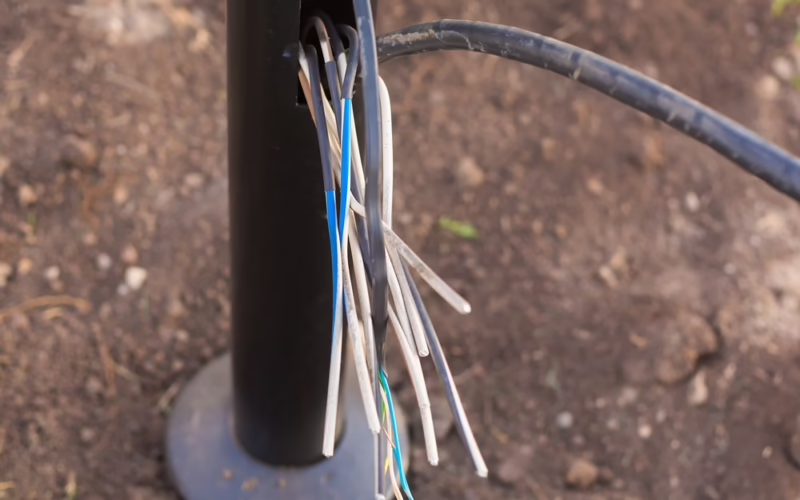
A well-planned outdoor lighting system adds curb appeal, extends living spaces into the evening, and provides valuable safety along walkways and driveways. However, exposure to rain, freeze-thaw cycles, lawn care equipment, and shifting soil takes a heavy toll on outdoor electrical infrastructure over time. Fixtures begin to flicker, entire cable lines go dark, or aging transformers struggle to maintain consistent power.
When an outdoor system fails, homeowners often wonder if the solution is a simple cable swap. In reality, replacing or re-laying underground lines involves complex load calculations, specialized waterproofing techniques, and strict adherence to National Electrical Code (NEC) standards.
At GB Electric, we specialize in diagnosing and restoring compromised exterior systems across the Lehigh Valley. Here is an overview of how professional landscape rewiring works, why outdoor electrical lines present unique technical challenges, and why expert installation protects your long-term investment.
Understanding the Structure of Outdoor Lighting Power
Before addressing wiring issues, it is important to understand how power moves through an exterior lighting network. Unlike indoor fixtures that connect directly to standard branch circuits, low-voltage outdoor systems rely on a step-down transformer mounted to an exterior wall.
This unit plugs into a 120-volt GFCI (Ground Fault Circuit Interrupter) receptacle and steps the voltage down to safe levels, typically between 12 and 15 volts AC. From the transformer, specialized direct-burial cables run beneath lawns and garden beds to supply power to path lights, accent uplights, deck lights, and wall sconces.
Because electricity drops in strength over distance,a technical phenomenon known as voltage drop, calculating total cable length, wire thickness (gauge), and fixture load is critical. If wire runs are designed incorrectly, fixtures at the end of the line will appear dim or yellowish, while fixtures closest to the transformer can overheat and fail due to over-voltage.
The Technical Challenges of Exterior Electrical Wiring
Rewiring an outdoor setup involves distinct difficulties that indoor projects do not present. Soil chemistry, groundwater, and physical movement make exterior electrical lines far more vulnerable over time.
- Underground Moisture Intrusion: Water is the primary cause of outdoor electrical failure. When wire splices are executed with improper connectors, groundwater seeps into the conductor within weeks. This leads to rapid copper corrosion, short circuits, and tripped main panel breakers. Professional rewiring requires gel-filled, silicone-sealed waterproof connectors rated for direct burial.
- Cable Gauge Calibration: Replacing compromised wire with undersized cable leads to significant power loss. Long runs require heavier 10-gauge or 12-gauge direct-burial cable. When expanding a system, an electrician must recalculate circuit capacity to determine if larger supply lines or multi-tap transformers are needed.
- NEC Burial Depth Standards: Direct-burial cable must be placed at proper depths to prevent accidental damage from aerators, shovels, and garden tools. Low-voltage lines require dedicated trenching at certified depths, while any 120-volt feed lines powering main transformers must be enclosed in rigid conduit buried even deeper.
- System Topology Design: How conductors are routed affects system performance. Electricians utilize specific wiring methods, such as T-hub distribution, loop wiring, or daisy-chaining, to balance current distribution across large properties.
If your property suffers from widespread fixture dimming or recurring short circuits, scheduling an inspection for landscape lighting in Allentown gives you access to advanced fault-finding equipment that isolates underground breaks without tearing up your lawn.
Core Components of a Professionally Wired System
Restoring an outdoor lighting network requires selecting commercial-grade components designed to work together seamlessly without overloading main circuits. The chart below details the core elements of a professionally wired system, their specific operational roles, and signs that indicate system degradation.
| Component | Operational Role | Signs Requiring Professional Attention |
| Low-Voltage Transformer | Steps down 120V household current to 12V–15V AC power | Loud buzzing, excessive heat output, burnt terminals, or tripped GFCI outlets |
| Direct-Burial Cable (10/2 or 12/2) | Transmits low-voltage current through underground runs | Exposed copper sheathing, heavy green oxidation, or severed lines |
| Waterproof Gel Connectors | Hermetically seals splices against groundwater and soil acidity | Intermittent fixture flickering, loose contacts, or corroded splice points |
| LED Light Engines & Fixtures | Converts low-voltage power into targeted illumination | Cracked glass seals, interior lens condensation, or dim output |
| Photocell & Smart Timers | Automatically manages daily power cycles based on daylight | System remaining energized during daytime or failing to activate at dusk |
The Professional Rewiring and System Restoration Process
When a licensed electrician rewires an exterior lighting system, they follow a systematic engineering approach to verify safety, energy efficiency, and long-term durability:
- System Diagnostics: The electrician tests transformer output, measures line resistance, and checks voltage levels at the furthest fixture using a calibrated digital multimeter.
- Load Balance Calculations: The total wattage of all fixtures is evaluated to verify that overall draw remains within the optimal 80% operating threshold of the transformer.
- Precision Trenching and Routing: Technicians lay fresh direct-burial cable along protected pathways, navigating around shallow root systems, hardscapes, and high-traffic garden beds.
- Waterproof Splice Execution: Every fixture tap is secured using weather-sealed, gel-filled connectors that withstand freeze-thaw cycles and heavy rain.
- Voltage Equalization: Using multi-tap transformers (offering 13V, 14V, or 15V outputs), the electrician adjusts terminal connections to equalize brightness across long wire runs.
- GFCI & Panel Verification: Primary feeds and exterior receptacles are thoroughly tested to verify ground-fault protection and code compliance.
When Professional Intervention Is Required
While adjusting a fixture stake or cleaning a glass lens is simple, replacing underground conductors or servicing power feeds requires specialized expertise.
Calling a licensed electrician is essential if:
- The system operates on 120-volt line voltage. Working on 120-volt outdoor lines carries severe shock and electrocution risks and requires electrical permits, rigid conduit, and strict inspection compliance.
- The main transformer continuously trips the main circuit breaker or GFCI outlet upon activation.
- You are upgrading an old halogen system to modern integrated LEDs, requiring transformer resizing and circuit re-balancing.
- Wiring runs pass beneath concrete walkways, paved driveways, or mature tree root structures.
- You observe scorched insulation, melted terminal blocks, or burn marks inside the transformer enclosure.
If you suspect damage to your property’s main exterior electrical panel or feeder lines, booking prompt electrician repairs in Whitehall keeps your home code-compliant and protected from unseen hazards.
Protect Your Outdoor Electrical System with GB Electric
Rewiring an exterior lighting system is not a minor cosmetic fix, it is a critical property infrastructure project that prevents electrical hazards, lowers energy consumption, and protects your home’s value.
At GB Electric, our team brings industry-leading diagnostic equipment, high-grade materials, and extensive field experience to every project. Whether you need underground line tracing, a transformer upgrade, or a complete system redesign, we deliver solutions built to withstand the elements. Contact GB Electric today to schedule your outdoor electrical evaluation.
