
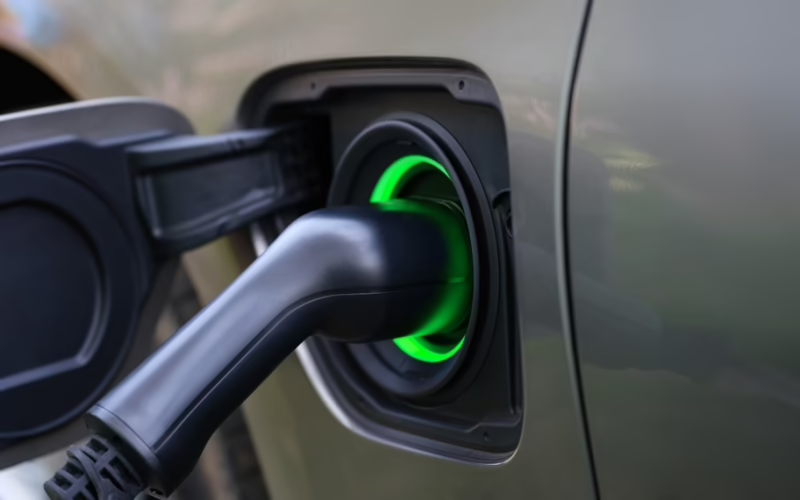
When you pull into a charging station or plug in at home, sitting in a cold or scorching car while waiting for the battery to fill is less than ideal. This leads many drivers to ask: Can you leave an electric car on while charging?
The short answer is yes, with a few caveats. Modern electric vehicles (EVs) are designed with sophisticated battery management systems that allow HVAC, entertainment systems, and interior lights to run safely while plugged into a charger. However, running these cabin comforts changes how fast your car charges and can affect overall battery performance depending on the situation.
At GB Electric, we frequently help new EV owners navigate the ins and outs of home charging setup and system maintenance. Here is what happens when you leave your EV turned on while plugged in, how it impacts charging times, and how to optimize your setup for maximum convenience.
What Happens When You Power On an EV While Plugged In?
Unlike traditional gas-powered cars that must keep the internal combustion engine running to operate the heater or air conditioning, electric vehicles rely entirely on high-voltage battery packs to power both the drivetrain and cabin accessories.
When you leave your EV on or activate its climate control while charging, the car draws power directly from the charging source to supply its 12-volt accessory systems and high-voltage HVAC unit:
- Level 1 Charging (120V Standard Outlet): Standard wall outlets supply a limited amount of power (roughly 1.2 to 1.4 kW). Running heavy heating or air conditioning can consume as much power as the charger provides, meaning your main battery charge rate will slow to a crawl or even stop completely.
- Level 2 Charging (240V Home Charger): Delivering between 7.2 kW and 19.2 kW, Level 2 systems provide plenty of overhead. The cabin climate controls draw a small fraction of the available power, allowing the main battery to charge efficiently while keeping the cabin comfortable.
- Level 3 DC Fast Charging: Fast chargers deliver extreme power (up to 350 kW). Running cabin accessories consumes an unnoticeable percentage of total power output, though heating or cooling a very hot or cold battery can slightly alter charging curves.
Understanding these power demands helps you plan your daily charging routine. If you need a dedicated Level 2 setup installed at home to handle both vehicle charging and climate preconditioning, working with GB Electric for an electric car charger installation in Allentown guarantees your panel and wiring meet all safety codes.
Comparing EV Power States During a Charging Session
Managing cabin comfort, battery health, and charging speed requires understanding how different vehicle states draw and direct power. The chart below illustrates how running your EV’s systems affects energy distribution across different charging levels.
| Vehicle State | Energy Draw Source | Impact on Level 1 (120V) | Impact on Level 2 (240V) | Impact on DC Fast Charging |
| Fully Turned Off | 100% directly to main traction battery | Charges at standard slow speed (~3–5 miles of range/hr) | Charges at full rated speed (~25–40 miles of range/hr) | Charges at maximum peak curve |
| Preconditioning Mode | Charger power prioritized for battery & cabin temperature | Minimal or no net battery gain during extreme weather | Negligible impact on overall charging time | Optimizes battery temperature for faster peak speeds |
| Full “On” (HVAC + Radio + Lights) | Charger power splits between cabin loads and main battery | Battery charging may pause or drop significantly | Adds a few extra minutes to reach 100% charge | Negligible impact on overall session time |
| Dog / Camp / Utility Mode | Charger power maintains interior temp and key sensors | Slows battery charge rate significantly over long periods | Minimal impact; ideal for overnight charging while sleeping | Minimal impact during short stops |
Key Benefits and Considerations of Keeping Your EV Active
Leaving your EV powered on or utilizing specialized vehicle modes while plugged in offers several distinct advantages, though there are a few practical rules to follow.
Here are the primary factors to keep in mind:
- Preconditioning Efficiency: Using your home charger’s power to heat or cool the interior before you leave saves precious battery energy for the road, extending your driving range.
- Safety Protocols: Most modern EVs automatically lock the gear selector in “Park” while a charging cable is physically latched into the port, preventing accidental drive-aways while plugged in.
- Battery Temperature Regulation: Leaving the vehicle active allows built-in thermal management systems to warm or cool the battery pack during charging, protecting long-term cell health in freezing winter or scorching summer weather.
- 12-Volt Battery Health: Keeping the vehicle powered on while drawing high cabin accessory loads protects the secondary 12-volt battery from draining unexpectedly, as the main traction pack active circuit maintains its charge.
If you ever experience unusual charging interruptions, warm outlet faceplates, or tripped circuit breakers during a charging session, booking a licensed electrician in Easton from GB Electric guarantees that your home’s electrical panel, breakers, and dedicated circuits are performing safely.
How Utility and Camp Modes Help
Automakers have made sitting in a charging EV easier by developing dedicated operational modes. Features like Tesla’s “Camp Mode” or “Dog Mode,” Hyundai/Kia’s “Utility Mode,” and similar settings on Rivian and Ford EVs allow the high-voltage battery to power HVAC, infotainment, and 120V auxiliary outlets without activating the driving controls or headlights.
These modes are ideal for drivers waiting out a charging cycle on a road trip, taking a break during a long commute, or using their vehicle as a mobile workspace. Because these modes maintain battery safety protocols while keeping cabin systems active, you can relax comfortably while your charger does its work.
Power Your Home EV Setup with GB Electric
Leaving your electric car running while charging is a safe, effective way to stay comfortable, provided your charger has the capacity to keep up. While standard outlets struggle to run climate control and charge the battery at the same time, a dedicated Level 2 home charging station gives you the power you need for fast charging and cabin preconditioning without compromise.
Contact Us Today
If you are ready to upgrade your home charging experience, GB Electric is here to help. From complete electrical panel evaluations to expert charging station setups, our team guarantees that your system is installed safely and built for performance. Contact GB Electric today to schedule your home charging evaluation!